
Search Milwaukee Busted Mugshots
Milwaukee Busted Mugshots searches usually start with the police department, then move to records, court, and state tools that can confirm where a name belongs. Milwaukee has its own records unit, a municipal court for ordinance cases, and a direct reporting path for some incidents. If you want a report, a case check, or a copy, start with the office that actually holds the record. That keeps the search fast and keeps you on an official trail. The city pages below point you to the right desk, the right case search, and the right backup when the first result is not enough.
Milwaukee Busted Mugshots Police Records
The Milwaukee Police Department is the first city stop for a Milwaukee Busted Mugshots search that begins with an incident, a booking lead, or a request for a police report. Chief Jeffrey B. Norman leads the department from 749 W. State Street, and the main non-emergency line is 414-933-4444. The department runs seven districts across the city, which matters when you already know the part of town tied to the event. It also has a Criminal Investigation Bureau, traffic safety work, narcotics, K-9, mounted patrol, marine patrol, and a records management division.
The city image at city.milwaukee.gov/police shows the main Milwaukee Police Department entry point for local records and service contacts.
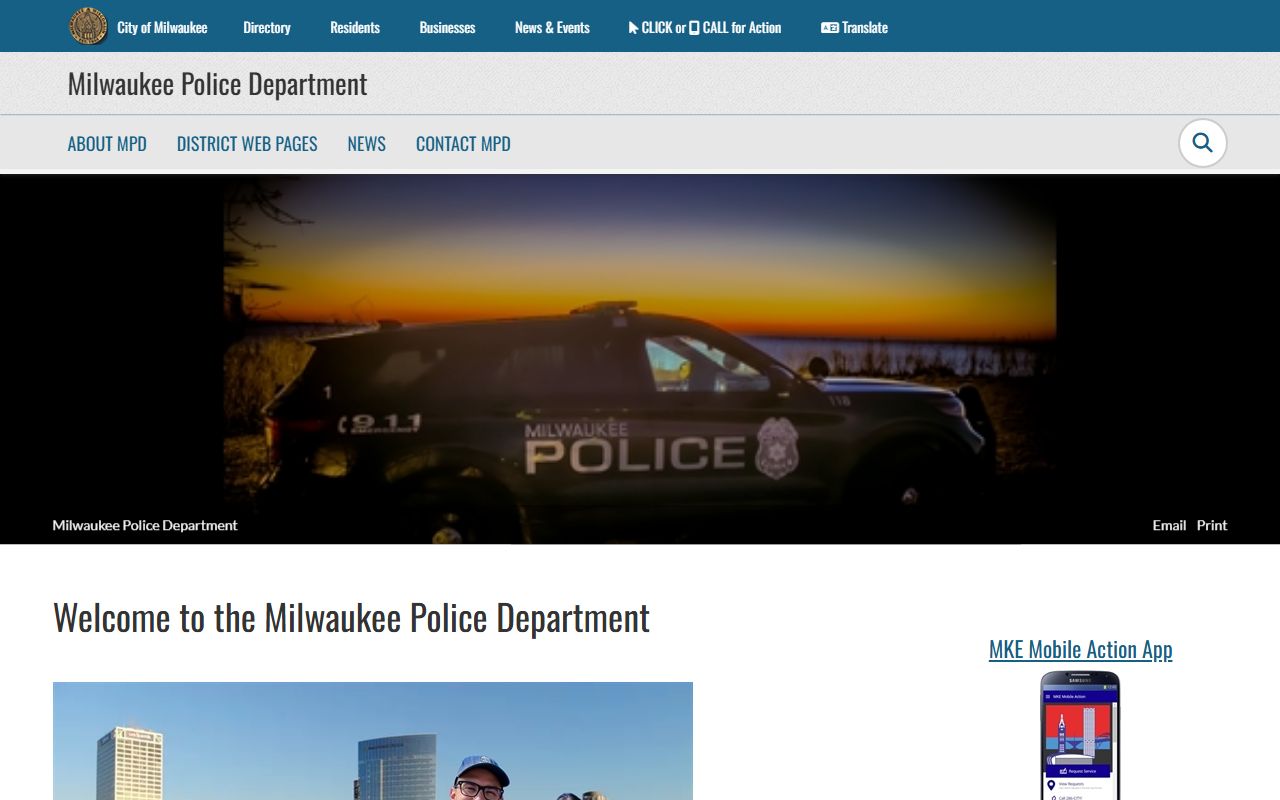
Use that page when you need the department name, the district structure, or the link to the records side of the office. The same page also points to online reporting and the open records process, so it is the right place to start when you are still sorting out whether the record is city police, city court, or something that will later move into county court.
That split matters. A police contact can turn into a report, a citation, or a case that later lands in court. If you begin with the city office that handled the stop, you can follow the trail without guessing which agency owns the file.
Milwaukee Busted Mugshots Records Requests
The MPD Records Unit processes police reports and other city records at city.milwaukee.gov/police/MPDRecords. The unit is at 749 W. State Street, Room 103, Milwaukee, WI 53233, and the phone number is 414-935-7401. Hours are Monday through Friday, 8:00 AM to 4:45 PM. The page covers incident reports, accident reports, and offense reports, so it is the right spot when a Milwaukee Busted Mugshots search needs the actual paper trail instead of a general web result.
A narrow request works best. Include the full name, the date of birth if the name is common, the incident date if you know it, the report number if you have one, and the likely district or location. MPD accepts requests in person, by mail, and online. A valid ID is required, and third-party requests need authorization when you are asking for another person's records. Juvenile records are restricted, so a search that touches a minor will not follow the same open path as an adult report.
Copy fees apply per page, and the unit typically needs 5 to 10 business days. Accident reports are also available through LexisNexis online. If the request is denied, the page says you should get a written explanation. That is useful because it tells you whether the issue is a missing detail, a privacy limit, or a record that sits with another office.
- Full name and any known alias
- Date of birth for a common name
- Approximate date or time of the incident
- Report number, citation number, or district if available
- Your contact details and delivery preference
Those small details keep the records unit from having to guess. They also make it easier to tell whether the right file is a police report, a citation, or a copy request that should move to court later.
Milwaukee Busted Mugshots Municipal Court
Milwaukee Municipal Court is separate from the police department, and it handles city ordinance violations rather than felony or misdemeanor criminal cases. The court page at city.milwaukee.gov/municipalcourt is the city hub, while query.municourt.milwaukee.gov is the case search tool. You can search by case number, citation number, defendant name, or violation location. That makes the court search useful when a Milwaukee Busted Mugshots lead turns into a parking ticket, a traffic matter, or another local ordinance case.
The case search page is built for quick checks. Once you open a case, you can see violation details, fine amounts, payment history, and court dates. Online payment has no extra service charge, and the city notes that payment can also be made by phone or in person. Payment plans are available for qualifying people, interpreters are available, and the court provides ADA accommodations. Those details matter because they show you how the case moves after the initial stop or citation.
If the person is asking about a plea, the court page lists the standard paths. A not guilty plea starts an arraignment process. A no contest plea goes to penalty handling. Appeals move to Circuit Court. That boundary is important. Milwaukee Busted Mugshots searches often begin with a police event, but a municipal court case is a different record track with its own office and its own rules.
Milwaukee Busted Mugshots and WCCA
When a city lead leaves the municipal level, Wisconsin Circuit Court Access becomes the next official stop. WCCA covers Milwaukee County civil, criminal, family, probate, small claims, and traffic cases. It gives docket data, not full documents, and it updates hourly. Search by party name, business name, case number, or county filter. If you only need to know whether a case exists, WCCA is the cleanest public index. If you need the actual file, the clerk still holds the paper copy.
WCCA does not replace the court office. It does not show complete files, and confidential case types are excluded. That means juvenile, sealed, and other restricted matters will not appear the same way as a public adult case. If the docket leads you to a document, use the Wisconsin Circuit Court clerk directory to find the right clerk office. If you need forms or self-help material, the Wisconsin Court System self-help pages and eFiling system keep the next step official.
For Milwaukee Busted Mugshots searches, WCCA is the bridge between a city contact and a court file. It can show whether the matter stayed local or became a circuit court case. That saves time and helps you avoid asking the wrong office for a document it does not hold.
Milwaukee Mugshot Search Trail
State tools add another layer when the city trail is not enough. The Wisconsin Department of Justice record check system can show adult criminal history information reported to the state, including arrests, charges, prosecutions, dispositions, and sentences. It is not the same as an MPD report, but it can confirm that a city lead turns into a broader criminal history result. If you need custody status instead of a record copy, the Wisconsin DOC Offender Locator helps when a person is in state supervision.
For release or custody notifications tied to local jails, the Wisconsin VINE County Jails page gives another official path. That can help when a Milwaukee Busted Mugshots search shifts from a report to a current custody question. The city police page, the MPD Records Unit, the municipal court, and WCCA all work in different lanes. The state tools are there when you need a broader check, a custody alert, or a way to confirm that the local result is not the final stop.
Use the search order that fits the question. Police for the event, records for the report, court for city violations, WCCA for circuit court dockets, and state tools for a wider check. That sequence keeps the search focused and avoids the dead ends that come from using a broad third-party site first.
Milwaukee Mugshot Search and Copies
The cleanest Milwaukee Busted Mugshots search starts with a name, a date, and one office at a time. If you already know the district, the report number, or the citation number, use it. If not, use the full name and a rough date range, then move from police to records to court. That approach keeps the search narrow enough to work and broad enough to catch the right file. It also helps when one record says the matter is local but another says the case moved on.
Wisconsin public access rules sit behind all of those offices. The Wisconsin Public Records Law explains the base rule for open government records, while the city and state offices decide how the request is delivered and what must be redacted. A request that is clear, direct, and tied to the right office usually gets a better answer than a long one that asks for everything at once. Start small, match the record type, and keep the focus on the official source.
Note: Start with the narrowest office that fits the record, then widen the search only if the first result points you there.