
Search Racine Busted Mugshots
Racine Busted Mugshots searches usually start with the city police department, the municipal court, or the statewide court tools that show docket details for public cases. If you want to find an arrest record, trace a citation, or check whether a city matter moved into circuit court, the key is to start with the right office. Racine gives you a local police records point, a municipal court lookup path, and Wisconsin court resources that can help you match a name to a case. That makes it easier to sort arrest history from court history and ask for the right record the first time.
Racine Busted Mugshots and Police Records
The Racine Police Department is the first local stop for many Racine Busted Mugshots searches. The department lists Chief Maurice Robinson, operates from 730 Center Street, and provides 24/7 patrol, an investigation bureau, traffic enforcement, a tactical team, and a K-9 unit. That matters because the police records section is where arrest reports, incident notes, and public records access begin to take shape. If you need a record tied to an arrest, the department's records section and public records process can point you toward the right file or the right request path.
Racine also notes online citizen reporting and open records compliance, which gives you a cleaner route when you are trying to match a person to a date, a call for service, or a case number. The best searches start with a name, a rough date, and the type of event. A mugshot alone rarely gives the full story. The police record can show the arresting office, the call type, and the basic facts that help you separate one person from another when names are common.
See the Racine Police Department page for the office tied to local records and reports. The photo below shows the police building that handles many of the city-level records requests behind Racine Busted Mugshots.
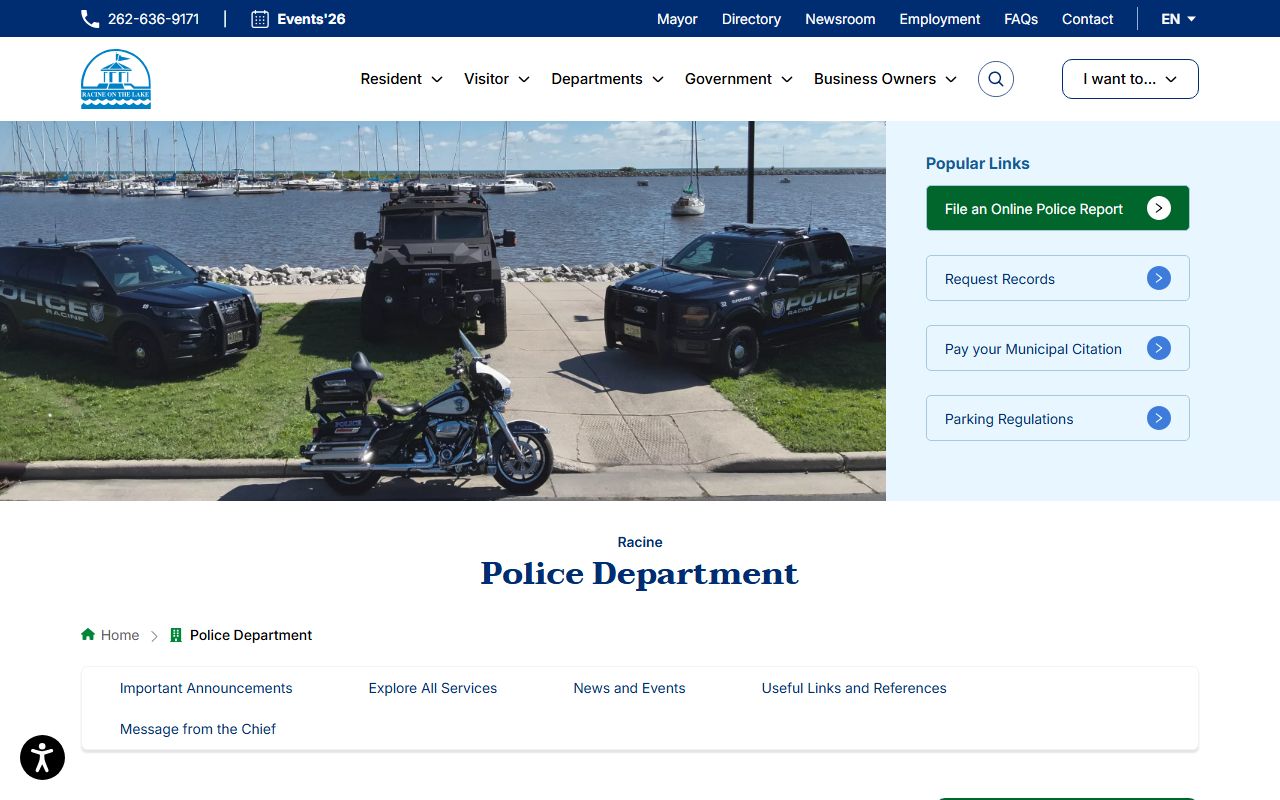
Use the department's records section when you need the local paper trail behind a Racine arrest. It is the most direct city source for arrest-related details.
Racine Municipal Court and Busted Mugshots
The Racine Municipal Court handles municipal violations, not every kind of arrest, so it is best used as a second step after the police side of your search. The court is at 800 Center Street, Racine, WI 53403, and the office hours are Monday through Friday, 8:00 AM to 4:30 PM. You can call 262-636-9181 for help with case lookup, fine options, scheduled hearings, interpreter needs, or ADA questions. For many Racine Busted Mugshots searches, the court file is where you confirm what happened after the arrest.
That is useful when a city ticket, ordinance case, or traffic matter followed the arrest and ended up in municipal court. The court page points you to online case lookup, so you can trace the docket without guessing. If the matter stayed local, the court may have the cleanest public trail. If it moved elsewhere, the court record can still give you a case number and hearing history that helps you keep the search organized.
See the Racine Municipal Court page for the local court office tied to city cases. The building below is the place to start when a Racine Busted Mugshots search needs a court date, not just an arrest date.
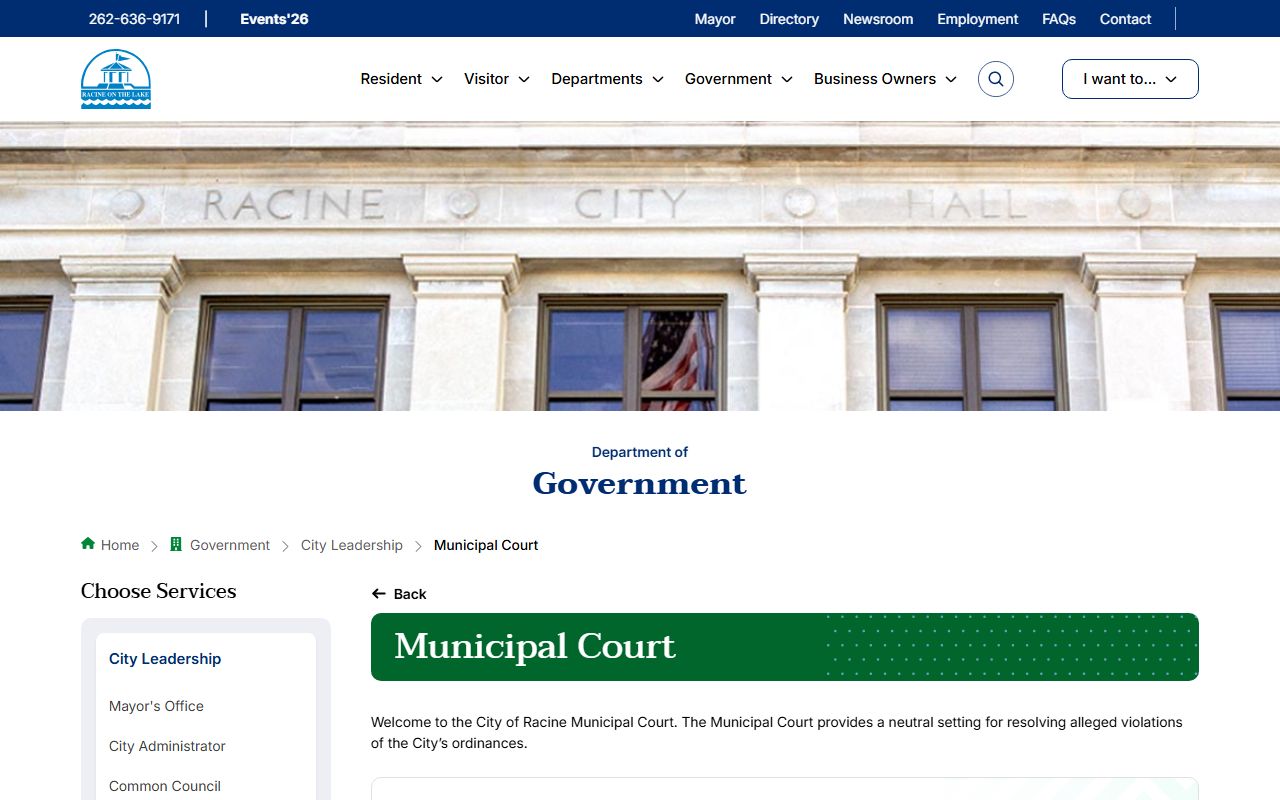
Municipal court records help you line up the fine, hearing, and case lookup details that follow a city citation or ordinance matter.
Racine WCCA Record Search
When a Racine case reaches circuit court, the statewide Wisconsin Circuit Court Access system becomes important. WCCA gives free public access to circuit court case information and lets you search by party name, case number, citation number, date range, and county. For Racine Busted Mugshots work, that means you can look for criminal, traffic, civil, or lien records without calling each office one by one. The site is updated often, but it shows docket information only. It does not replace the full case file, and it does not give you every record that may sit in a clerk's office.
That difference matters. WCCA is good for the outline, not the whole folder. It can show that a case exists, who it involves, and where it stands, but the actual papers still live with the clerk or the office that keeps the record. Racine searches often need that split view. Start with WCCA to see whether the case is active, closed, or tied to a specific citation, then move to the city office or clerk office that can provide copies or more detail.
CCAP, the Consolidated Court Automation Programs office, supports the statewide court system that feeds WCCA. It is the back end that keeps the court data moving. If you want the record trail for Racine Busted Mugshots to make sense, WCCA and CCAP together show how local city events can turn into statewide court entries.
Requesting Racine Busted Mugshots
The Wisconsin Public Records Law is the legal base for most Racine records requests. It says records are open unless a specific exception applies, and it allows requests to be made orally or in writing if they are reasonably specific. For practical use, that means you want to name the person, the date range, and the office as clearly as you can. A narrow request is usually faster than a broad one, and a records clerk can work with that more easily. If you are asking for Racine Busted Mugshots material, include the arrest date, the report date, or the citation number if you have it.
The law also says custodians should respond as soon as practicable, and that copy charges are tied to actual, necessary, direct cost. That is useful when you ask the police department for a report or when you ask the court for a file copy. If you only need a case number, WCCA may save time. If you need the actual police narrative, photo, or attachment, the city office is still the better source. Racine's own records section and municipal court page give you the local contact points that fit those two different jobs.
For people who want one more layer of official help, the Wisconsin State Law Library county legal resources directory is a good place to look. It points users toward county and city legal resources, which helps when a Racine Busted Mugshots search needs a path beyond the police desk or court clerk. The library's links are useful when you want the official route, not a scraped list from a third-party site.
Note: WCCA shows court dockets, not full mugshots, so the city police office and court clerk usually fill in the rest of the record trail.
Racine Police Record Search
Racine Busted Mugshots searches work best when you treat the police side and the court side as two parts of the same record trail. The police side can show the first report, the records request path, and the department that handled the arrest. The court side can show whether the case became a city citation, a municipal violation, or a circuit court matter. If you only look at one side, you may miss the key date or the case number that links everything together.
That is why it helps to keep the details simple. Use the full name if you know it. Add the arrest date, the city office, and the case type. Then check the police page, the municipal court page, and WCCA in that order. If the search turns up a circuit case, the statewide court record can give you a steady reference point. If it stays local, the city office is still where the record lives.
Racine gives you two clear city tools, and both are official. One is the police department. The other is the municipal court. Together with WCCA, they make Racine Busted Mugshots searches more direct and less guesswork-heavy.
Racine Court Record Search Tips
Use a short, clean set of facts when you search Racine Busted Mugshots records. A full name helps. A date or month helps more. The office name helps most. If you start with the wrong office, the search can drift fast, especially when a person has both a police contact and a court case. Keep the search tied to Racine, then expand only if the city record points you elsewhere.
That approach also keeps the record trail easy to read. Police records explain the arrest side. Municipal court records explain the hearing side. WCCA explains the circuit court side. When you line those three sources up, the public record makes more sense and you spend less time guessing which office should answer the next question.